

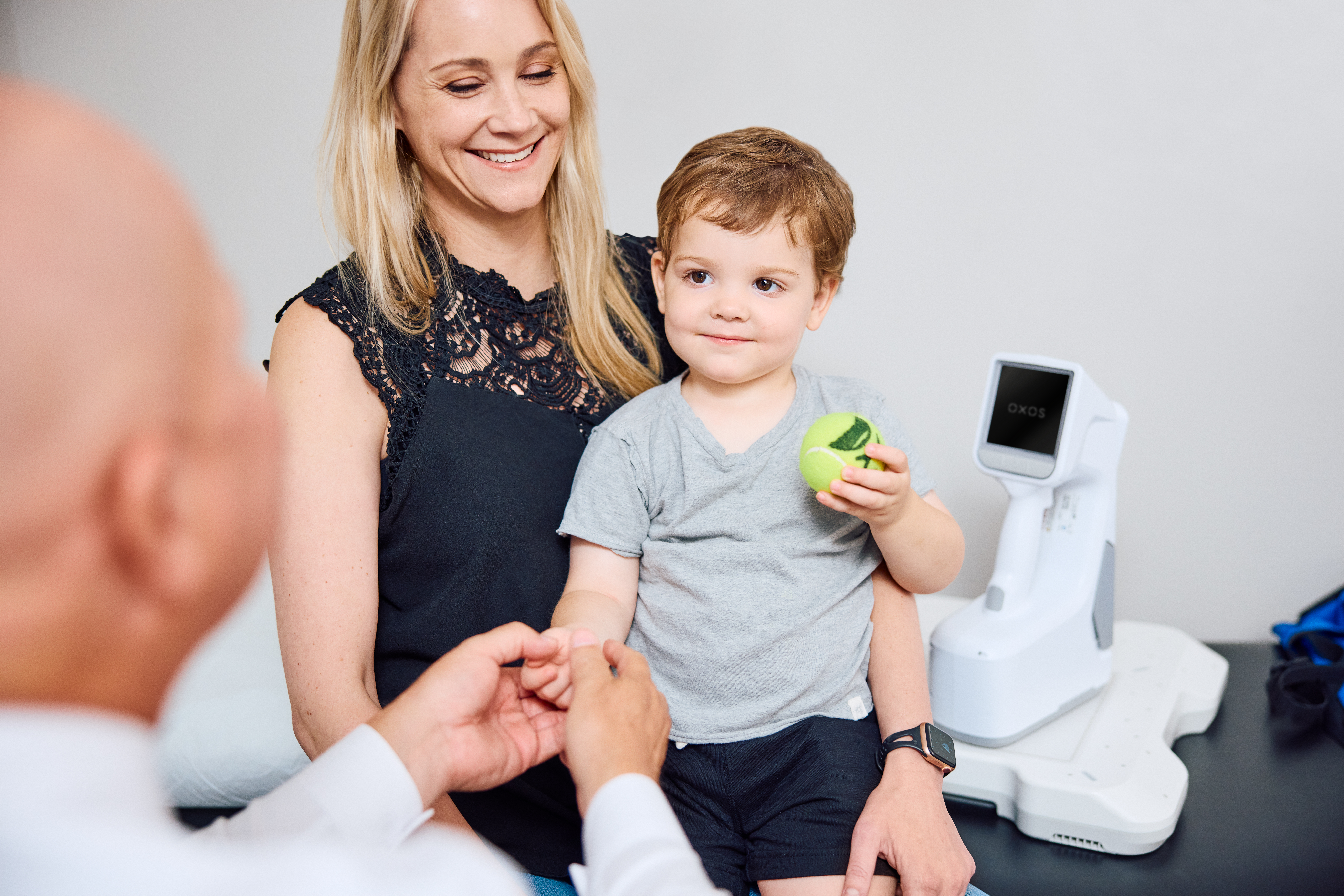
I say this as an orthopedic surgeon, a father, and a Whitney Houston fan: Our children are our future, and they deserve the best care. Whether treating a toddler’s fracture or a congenital deformity, the decisions made today can shape how a child moves tomorrow. That’s why pediatric imaging must be as safe as it is accurate.
And that’s just one of the reasons we created MC2: to help pediatric orthopedic surgeons deliver the best care to young patients, utilizing pediatric imaging whenever and wherever it’s needed.
Pediatric Imaging Requires Safety and Precision
Pediatric patients present unique imaging needs. Their smaller anatomy, evolving skeletal structures, and increased radiosensitivity call for low-dose, high-clarity imaging solutions. Meanwhile, pediatric orthopedics demand frequent follow-ups in order to monitor bone growth and healing over time, which adds complexity to care.
Traditional X-ray systems are not optimized for these requirements. High radiation doses and cumbersome workflows can delay diagnosis, increase stress for families, and create inefficiencies in clinical operations — especially when imaging requires trips to radiology or general imaging suites.

The Status Quo is Sub-Par
When pediatric X-rays are needed, the process is arduous for orthopedic surgeons, parents, and children alike.
Orthopedic staff with an X-ray machine onsite have to send children down the hall to the lead-lined X-ray room for imaging. It adds a layer of complexity to the process, with staff running from room to room, and can be scary for young patients who aren’t comfortable leaving their parents’ side. For orthopedic surgeons without onsite X-ray, the situation is worse: Parents have no choice but to bring their children to multiple facilities as they seek diagnosis and treatment, sacrificing naps and/or schooling along the way.
To top it off, capturing the right image is challenging when treating children. Legacy X-ray machines are large, immobile, and hard to maneuver. Getting the right position is time-consuming and often requires re-shoots. The situation is exacerbated when working with children who have smaller anatomy and may struggle holding the right body part at the right angle, especially if frightened or too young to understand what’s happening.
Our MC2 portable X-ray system is designed to meet these challenges head-on, combining low radiation output and high-quality imaging in a versatile, easy-to-use device that’s accessible anywhere.
MC2 is Transforming Pediatric Imaging
OXOS unveiled MC2 last year: MC2 is the world’s first smart, portable, and cordless digital X-ray system for static and dynamic imaging of extremities. MC2 brings imaging to the point of need – which, in this case, could be the pediatrician’s office or pediatric orthopedic clinic. It expedites diagnosis and improves patient outcomes. With MC2, pediatric imaging is safe and accessible, easy to use, and versatile.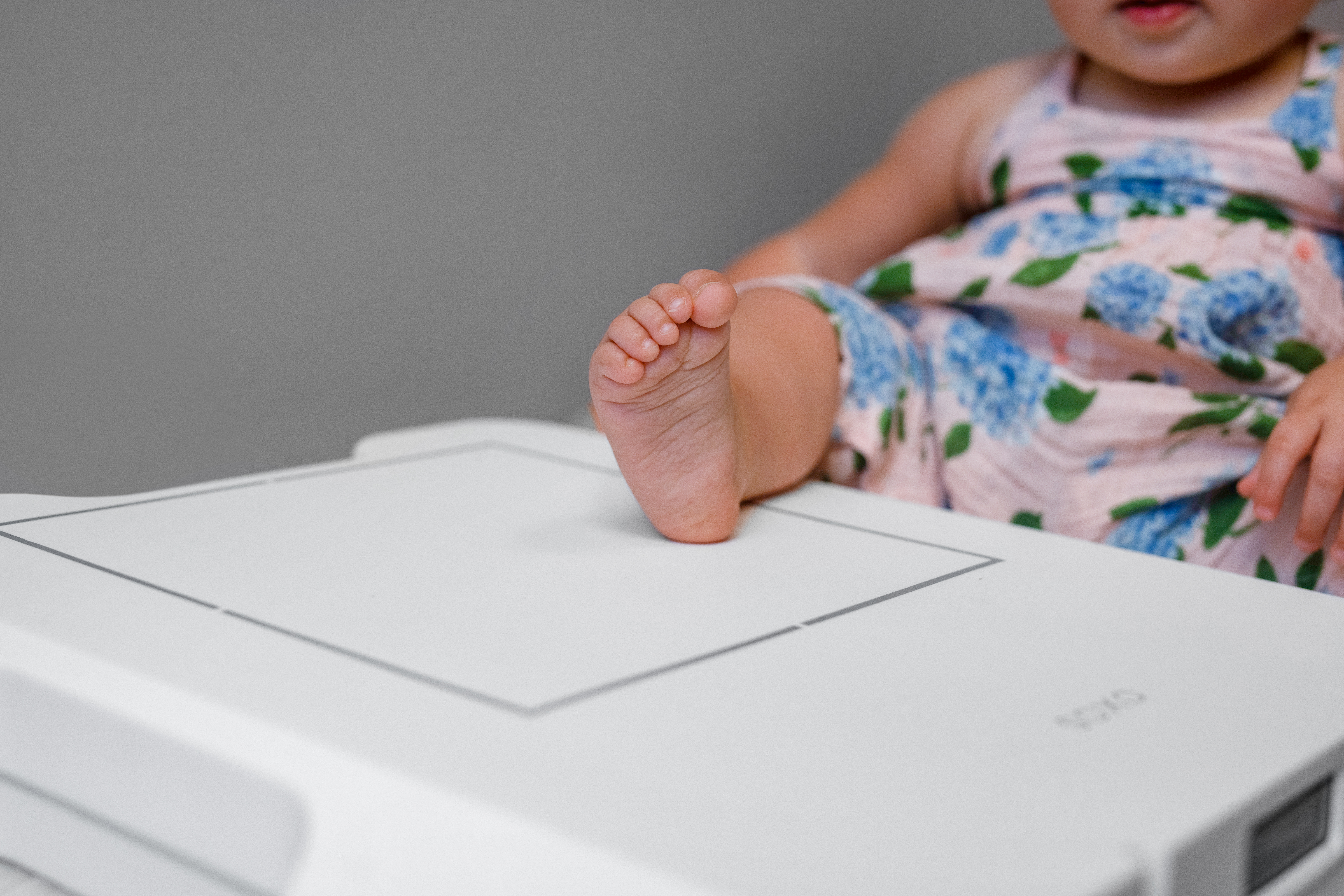
Safe & Accessible
MC2’s low radiation profile and built-in safeguards make the device safe for pediatric imaging — whether monitoring healing fractures, evaluating joint alignment, or tracking changes in growth plates.
- The device’s X-ray tube voltage is between 40–80 kV, with radiation intensity of 1–2 mA and a small scatter area.
- Its patented “no-fire” positioning system automates the ALARA (as low as reasonably achievable) principle, preventing clinicians from emitting radiation unless the device is properly aligned.
- MC2 includes an automatic collimator to limit X-ray beam field size, collimation pucks, and a pediatric filter for additional manual adjustment.
By packaging safe X-ray imaging in a small, portable device, MC2 dramatically improves the accessibility of pediatric imaging. Finally, parents can have their children diagnosed and treated all in the same room, during the same appointment.
Easy to Use
MC2 can’t just be safe and compact enough to plug into diverse care settings. For orthopedic clinics, pediatricians’ offices, and other niche facilities to bring X-ray imaging in-house, the device needs to be user-friendly. MC2 is designed for efficiency, creating an easy imaging experience for patients and care providers. Its simple interface is designed to support experienced medical imaging practitioners as well as those new to X-ray technologies.
For instance, MC2 includes an integrated viewfinder to help properly align anatomy, making it easy to train new users and X-ray with efficiency.
MC2 is made to accelerate the imaging process, from capture to review, allowing clinicians to diagnose and initiate treatment at the point of need. Its non-intimidating design and quick, seamless operation improve patient cooperation and reduce stress for both children and families.
By bringing imaging closer to the patient, MC2 enhances care continuity and supports a more efficient, compassionate clinical experience.
Versatile
MC2 delivers excellent image clarity and accuracy with modern automations and flexible imaging configurations. The X-ray device offers radiographic diagnostics via four distinct modes: radiography, Dynamic Digital Radiography (DDR), fluoroscopy, and photography. MC2’s compact size, ergonomic design, and accessories accommodate different anatomical positions and help operators capture off-angle shots when needed.
MC2 is easy to maneuver and deploy in any setting with its low scatter area — from outpatient pediatric clinics to emergency rooms to inpatient units. Imaging can be performed bedside when needed, reducing the need to transport young patients and minimizing disruption to care routines.
Why Pediatric Practices Choose MC2 for X-ray
Pediatric clinicians are integrating MC2 into their workflows because it addresses key clinical needs:
- Safety against unnecessary radiation for growing, vulnerable patients
- High-resolution imaging suitable for a wide range of use cases
- Mobility and ease of use that enhance clinical efficiency
- Point-of-care access that improves speed and quality of care
MC2 streamlines diagnostics and treatment for a more patient-centered experience and better outcomes.
“MC2 makes X-ray imaging accessible anywhere you need it, without compromising the quality of imaging,” said Dr. Youssra Marjoua, Hand and Upper Extremity Surgeon at The Cleveland Clinic. “It helps to protect and provide better care to patients in a way that wasn’t previously available. OXOS truly has pioneered the field in a way that hasn’t been done before.”
See MC2 in Action
To learn how MC2 can support your pediatric practice, request a demo or see more here.